
Roof leaks and internal staining
Water may travel from its entry point before appearing inside, so the visible mark and roof detail both need consideration.
Roof repair assessment and planning
Assessment and repair guidance for leaking roofs, damaged coverings and defects across pitched and flat roofs, with the work defined from the condition found.
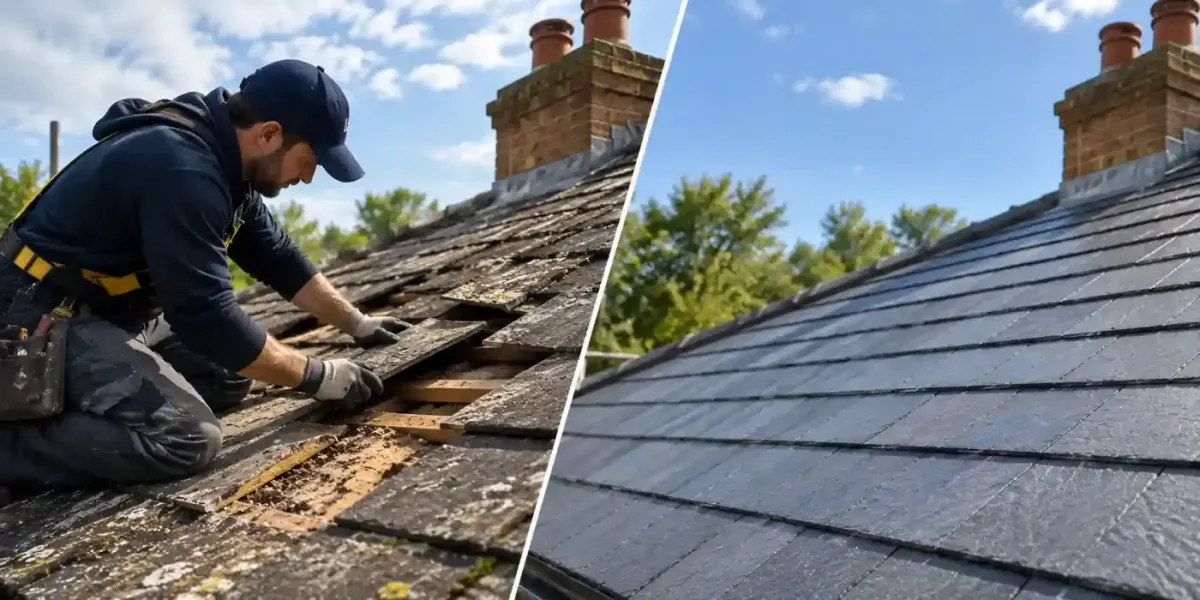
A considered starting point
Water marks, damp patches, loose materials and visible roof damage can have more than one possible cause. Water can travel along coverings, underlay or timbers before it appears indoors, so the visible leak may not sit directly below the point where water enters.
A roof leak repair therefore starts with the symptoms, the roof covering and connected details rather than a remote assumption. Inspection is needed before recommending a local repair, related work to adjoining junctions or broader renewal, and not every leak can be diagnosed or repaired during a single visit.
Problems and warning signs
A symptom can indicate where to begin looking, but it does not prove a single cause.
Water may travel from its entry point before appearing inside, so the visible mark and roof detail both need consideration.
Missing, slipped or cracked tiles and displaced slates can expose the roof build-up, while nearby coverings and fixings also need consideration.
Loose ridge or hip details and deteriorated verges can expose roof edges or junctions to water and wind, but the surrounding condition determines the repair boundary.
Lead flashing, chimney interfaces, valleys, abutments and changes in roof shape can create water-entry paths that are not obvious from the internal stain or from ground level.
Splits, failed seams, upstands, outlets and perimeter details need assessment in the context of the flat-roof covering and its drainage.
Blocked outlets, overflowing gutters, failed joints or roof-edge details can direct water towards walls and roof timbers and may require coordinated drainage work.
Inspection and assessment
The purpose of assessment is to understand the likely route and extent of the defect before a repair is proposed.
The position, pattern and timing of a leak or visible defect provide useful context for inspection.
Coverings, flashings, junctions, drainage and surrounding materials may all affect the repair boundary.
Roof height, pitch, safe access and areas hidden from view affect what can be inspected and how.
The recommendation can then distinguish a local repair from related remedial work or wider renewal.
Roof repair cost
A reliable roof repair cost depends on the condition found and the work required. Skycraft does not use a fixed price that could overlook access, materials or further investigation; the quotation follows the identified scope.
Tiles, slates, flat-roof systems and connected details require different materials and repair methods.
The size, position and condition of the affected area determine whether the work can remain localised.
Roof height, pitch, surrounding ground and site constraints affect safe access, labour and equipment requirements.
Replacement coverings, fixings, underlay and leadwork or other flashing materials must suit the existing roof and agreed work.
Conditions beneath coverings or behind junctions may need closer inspection before the final repair scope can be confirmed.
The time required and the measures needed to work safely vary with the defect, access and surrounding roof condition.
Repair or renew
The decision should follow assessment of the defect and the condition of the roof around it.
A focused repair may be appropriate where the defect is limited, the affected area can be accessed safely and the surrounding covering and details remain serviceable.
Broader assessment may be needed where leaks recur, defects are widespread, several connected details have deteriorated or surrounding materials cannot support a sensible local scope. Re-roofing or replacement is considered only where the findings justify it.
Inspection should establish the practical boundary rather than assuming that every roof can be repaired locally or that replacement is automatically required.
Qualifying repair work
A 5-year warranty is available on qualifying roof repairs, subject to the agreed scope and written terms.
Geographic coverage
From its West Drayton business base, Skycraft handles roof-repair enquiries across Surrey, Greater London and surrounding areas. The area pages provide the appropriate route for location-specific information without suggesting that Skycraft is the nearest contractor to every property.
Suitable scheduled or substantial repair work can also be considered nationwide. This planned-project capability is separate from the regional availability route for urgent problems.
Roof-repair evidence
These genuine projects document different repair-related scopes without implying that the same diagnosis or work applies to another roof.
This localised roof repair in Ascot, Berkshire involved stripping the affected section, removing the old membrane and battens, installing a new breathable membrane and treated battens, reinstating the roof covering and renewing approximately one metre of cement verge toward the top of the roof edge.
View projectA genuine Skycraft Roofers roof-verge repair in Camberley, Surrey, documented in photographs showing cement or mortar work along the gable verges and visible roof-edge detailing.
View projectA genuine Skycraft Roofers chimney repair and leadwork project in Epsom, Surrey, documenting an existing flashing condition and newly installed lead step flashing at a chimney and roof junction.
View projectRelated roofing routes
Related service areas
Working process
Share the property location, roof type, visible symptoms and when the problem occurs.
Consider access, height, affected roof areas and any connected details that may need inspection.
Separate the visible defect from underlying or adjoining issues before defining the work.
Proceed with a repair quotation or consider wider renewal where the assessment supports it.
Frequently asked questions
Often, yes. A leak can sometimes be traced to a specific tile, slate, flashing or junction and repaired without wider work. This depends on the condition found once the roof is inspected — where surrounding materials have also deteriorated, a broader repair or renewal may be the more appropriate route.
The visible damp or water mark is considered alongside the roof covering, flashings, junctions, drainage and the timing of the leak. Because water can travel before appearing indoors, the entry point may be elsewhere and further investigation can be needed before a repair is defined.
The quotation depends on access and working height, the roof type, the extent and position of the damage, suitable materials and flashing, labour and safety requirements, and whether closer investigation is needed. A clear quotation can be provided once the relevant scope is established.
Replacement or re-roofing may need consideration where defects recur, deterioration is widespread or surrounding materials cannot support an appropriate local repair. It is not assumed from a single symptom: the findings should determine whether a contained repair or wider work is justified.
The property location, roof type, when the issue started and where on the roof it appears to be all help. Photographs of the affected area, taken safely from ground level or an existing vantage point, can also be attached directly to the enquiry form.
Start an enquiry
Share the location, roof type, visible damage or leak pattern, access considerations and whether the enquiry concerns a local repair or wider scheduled work.