
Active roof leaks
Active dripping or spreading water marks need attention, but the internal location may differ from the roof entry point.
Emergency roof repair
For an active leak, sudden water ingress, storm damage, displaced coverings or a roof section that may be unsafe across the regional emergency service area.
Attendance and same-day availability depend on current workload, travel conditions and safety. Emergency enquiries can be submitted 24 hours a day. If there is immediate danger to life, contact 999 first.
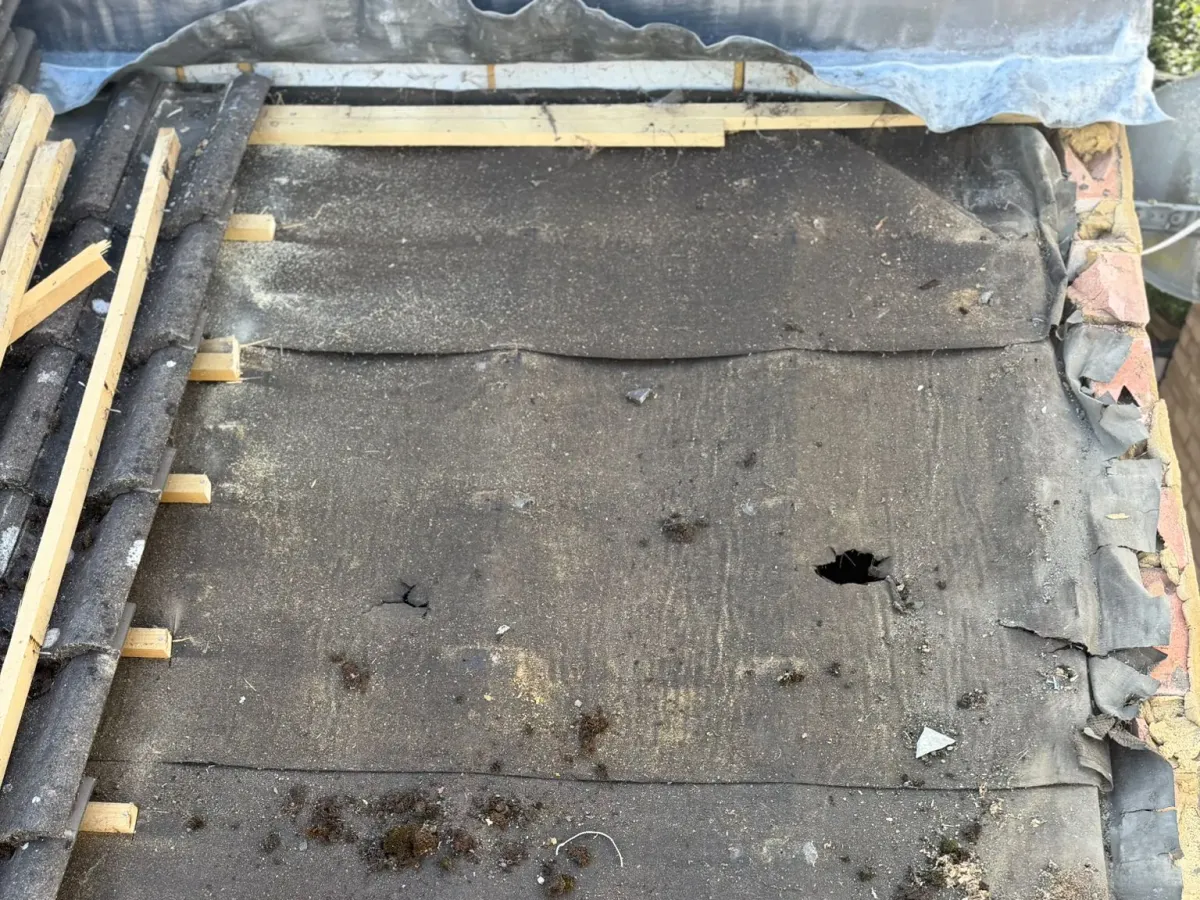
Before you contact us
An emergency roofing enquiry concerns a problem that is actively causing damage or may present an immediate safety risk: active water entry, recent storm damage, broken or displaced tiles and slates, fallen debris, or an exposed roof section.
An urgent roof repair cannot be defined safely from the internal symptom alone, and urgency does not guarantee that permanent repair is possible immediately. Roof type, damage, access, weather and safety determine whether assessment, temporary weather protection or a scheduled follow-up is appropriate.
Immediate safety
A few simple precautions can help until the problem is assessed.
Avoid climbing onto the roof
Roof surfaces can be unstable or slippery after storm or leak damage.
Keep out of unsafe areas
Stay clear of loose materials, damaged ceilings and areas beneath suspected structural damage because debris can fall without warning.
Keep clear of electrical hazards
Do not touch fallen cables, wet electrical fittings or affected equipment. Use appropriate professional help; isolate power only if the consumer unit can be reached without risk.
Use buckets or containers for an internal leak
Where it is safe to do so, this can limit water damage while a repair is arranged.
Call 999 for immediate danger
Fire, a collapse risk or any danger to life needs the emergency services first, before contacting us.
Photograph the damage from a safe position
Ground level, a window, or another safe vantage point is enough — do not go onto the roof to take photographs.
Problems we assess as emergencies
Assessment on arrival determines the safest and most appropriate action.
Active dripping or spreading water marks need attention, but the internal location may differ from the roof entry point.
Recent severe weather has visibly disturbed or displaced roof materials.
A gap or displaced tile is exposing the roof build-up to the weather.
A junction around a wall, abutment or roof change is letting water in.
A split, tear or sudden water ingress on a flat-roof area.
Water appearing near a chimney, which may involve masonry, flashing or an adjoining covering.
A branch, tile, or other debris has fallen onto or through the roof.
A section of roof appears structurally compromised or is open to the weather.
On arrival
The priority is a safe assessment. Temporary weather protection is considered only where conditions, access and the roof allow it.
The roof and surrounding area are checked to understand the extent of the problem and any immediate risk.
Where safe and feasible, loose material may be secured or temporary protection used to limit further water entry before permanent work.
A permanent repair may be possible, but some problems need a scheduled follow-up once suitable materials, access or safer conditions are available.
A clear explanation of what was done, and what — if anything — still needs to be arranged.
Emergency roofing cost
No fixed call-out or repair price is published. The work that can be quoted depends on the situation reported and the conditions found.
Roof height, pitch, property layout and the access equipment needed affect what can be assessed and carried out safely.
The covering, affected area and extent of damage influence whether a contained repair or wider work is needed.
Weather, unstable materials, electrical hazards and conditions below the roof can restrict the work possible at the time.
The need for temporary weather protection before a permanent repair can affect the scope and any follow-up work.
Suitable replacement materials, flashing or other details may need to be identified and arranged after assessment.
Property location, current workload and safe travel conditions affect attendance and the scheduling of any follow-up work.
Emergency or scheduled?
Both routes reach the same team, but they are prioritised and arranged differently.
For an active leak, storm damage or an unsafe roof section within Surrey and surrounding counties.
For a non-urgent repair, and for scheduled, substantial or specialist roofing projects, which can be considered nationwide.
Choose emergency attendance for a problem that is happening now; choose the general Roof Repairs page for a non-urgent repair or a scheduled quotation.
Coverage
From its West Drayton business base, Skycraft considers emergency enquiries across Surrey, Greater London and surrounding counties. Attendance and same-day availability remain conditional on current workload, travel conditions and safety.
Nationwide positioning applies to scheduled, substantial or specialist roofing projects — not to emergency call-outs. See the general Roof Repairs page for non-urgent repair enquiries, including work outside this region.
Related roofing routes
Related service areas
Safety-led advice for the first steps when severe weather is followed by water entry.
Frequently asked questions
Yes. Attendance and same-day availability depend on current workload, travel conditions and safety. Emergency enquiries can be submitted 24 hours a day; enquiry submission does not mean guaranteed overnight attendance.
No. Attendance and same-day availability depend on current workload, travel conditions, property location, access and safety. The information supplied is reviewed before the appropriate next step is confirmed.
Keep away from the roof, damaged ceilings, fallen cables and wet electrical fittings. Use a container only where safe, take photographs from a safe position and call 999 first if there is immediate danger to life.
Temporary weather protection may be possible where the roof, access, weather and safety conditions allow it. It is not guaranteed, and permanent repair may require a scheduled follow-up with suitable access and materials.
Cost depends on access and working height, roof type and damage, safety requirements, temporary protection needs, materials, the permanent repair scope, property location and scheduling. No fixed call-out or repair price is published.
When contacting an emergency roofer, share the property location, what is happening now, when it started, visible damage, roof type if known, immediate safety concerns and photographs taken from a safe position.
Start an enquiry
Share the property location, what you can see, when it started, and photographs from a safe position. We'll review the information and confirm the appropriate next step.