
Leaks and internal water marks
The location, timing and spread of water ingress help direct assessment, but the visible mark may not sit directly below the entry point.
Commercial roofing assessment and planning
Commercial roof assessment, localised repair and planned wider work for flat and pitched roofs, with the scope coordinated around access and site requirements.
An active leak or storm-related problem should use the Emergency Roof Repairs pathway. This page covers scheduled commercial assessment, repair and planned-project enquiries.
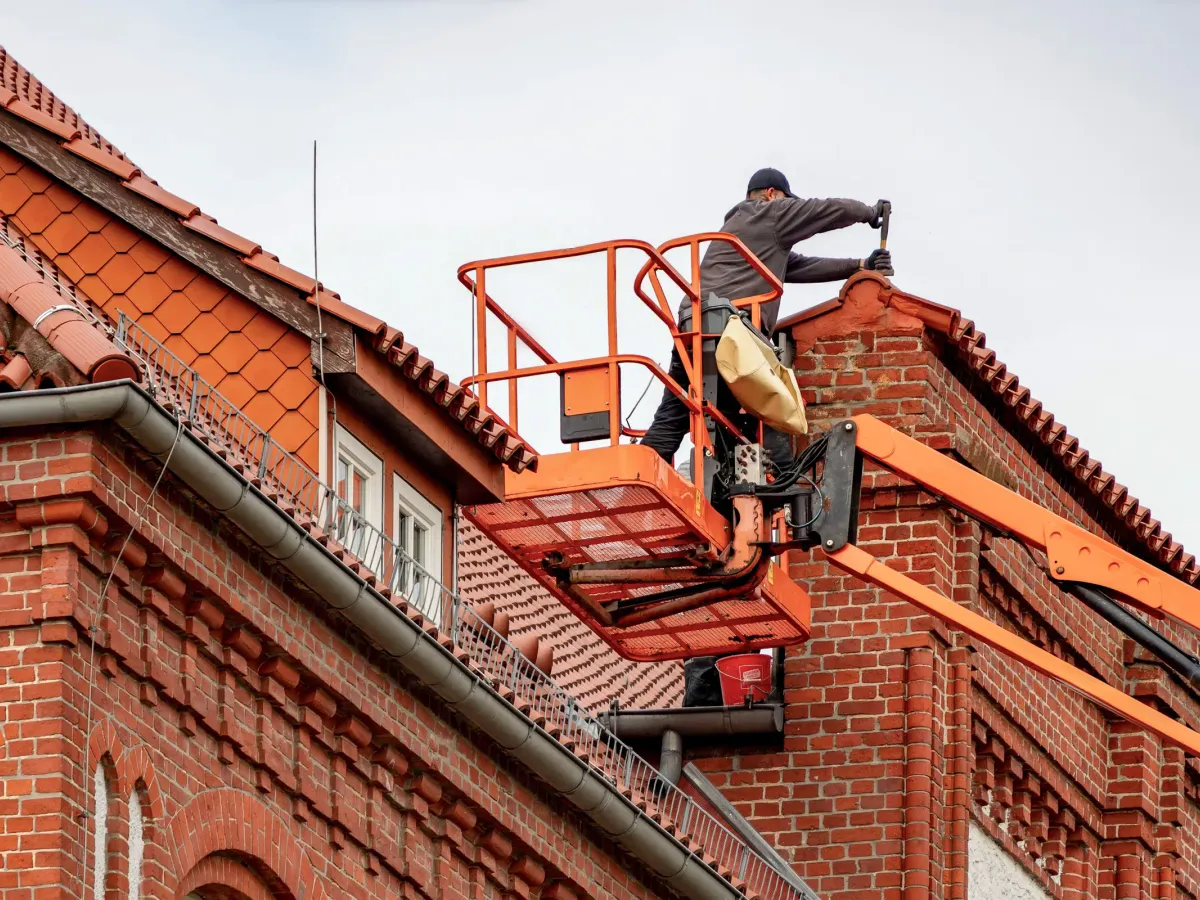
Commercial roofing overview
Commercial roofing enquiries can involve a leak in one area, defects at flashings or outlets, deterioration across a wider covering, or planned refurbishment and replacement. Assessment establishes the existing roof type, visible condition, likely repair boundary and access requirements before work is proposed.
A commercial roofer also needs a practical brief for the site. Roof size and construction, occupied areas, deliveries, waste handling, safe access and operating constraints can all affect how the work is assessed, quoted and coordinated.
Where asbestos or other hazardous materials are suspected, appropriate specialist assessment may also be required alongside any roofing work.
Commercial roof concerns
Describe the visible symptoms and affected areas without assuming the cause. Several roof details can contribute to the same internal sign.
The location, timing and spread of water ingress help direct assessment, but the visible mark may not sit directly below the entry point.
Split, displaced, punctured or deteriorated coverings may suit a local commercial roof repair or indicate a wider affected area.
Abutments, upstands, penetrations, rooflights and changes in roof level need to be checked alongside the main covering.
Blocked outlets, gutters, falls and water remaining after rainfall can affect both the roof covering and the repair scope.
Seams, edges, outlets, rooflights and the condition of the deck or substrate can all affect a commercial flat-roof decision.
Repeated defects or deterioration across several areas may require a broader refurbishment assessment rather than another isolated repair.
Commercial roofing scope
The appropriate scope depends on the roof found, safe access and the operational needs explained by the customer.
Assessment of the accessible covering, junctions, drainage and visible defects to help establish the work that should be quoted.
Targeted repairs can be considered where assessment identifies a contained defect and the surrounding roof remains suitable.
Commercial flat-roof repair, replacement and new installation can be considered; the Flat Roofing page explains the confirmed system-specific scope.
Pitched covering, flashing and junction concerns can be assessed for repair or planned wider work according to the roof condition.
Outlets, gutters, rooflights, pipes, vents and edge details are considered where they affect the commercial roofing scope.
Wider refurbishment or replacement is considered only where condition, recurring defects or the proposed project make local repair unsuitable.
Survey and quotation
Survey findings determine the appropriate scope before a quotation is provided.
Share the property type, location, roof type if known, approximate affected area, visible symptoms and any safe photographs.
Explain access arrangements, occupied areas and business operating constraints that may affect the assessment.
Roof condition, existing systems, drainage and roof detailing are assessed and recorded.
A quotation follows the survey, based on the scope, access and project requirements identified.
Commercial roofing cost
A reliable figure depends on the building and the work identified following survey. No fixed range can account for every commercial roof or project.
The overall roof area and its existing condition affect materials and labour.
Height, roof type and site constraints affect the access and equipment needed.
The existing roof system and its condition affect the scope of repair, refurbishment or replacement.
Whether the building remains occupied during work affects sequencing and site protection.
Operating constraints, deliveries, waste handling and any agreed sequencing affect project planning.
Drainage, rooflights, penetrations and edge details all need correctly detailed work.
Repair or replace?
The decision should follow survey findings and the operational needs of the site.
Repair may be appropriate where the defect is contained, compatible materials and details are available, and the surrounding covering remains serviceable.
Wider work may be more appropriate where deterioration is widespread, the substrate or drainage also needs attention, or recurring defects make another local repair unsuitable.
The decision also considers the existing system, access and safety requirements, roof use, junction details and how work can be coordinated around the premises.
Geographic coverage
From its West Drayton business base, Skycraft handles commercial roofing enquiries across Surrey, Greater London and surrounding areas. The location pages provide the appropriate route for regional coverage information.
Suitable scheduled commercial and substantial roofing projects can also be considered more widely. This does not imply nationwide emergency attendance.
Related roofing routes
Related service areas
Frequently asked questions
Confirmed work includes assessment and localised repair, commercial flat and pitched roofing enquiries, drainage and junction details, and planned refurbishment or replacement where the roof condition supports wider work.
A local repair may be possible where assessment identifies a contained defect and the surrounding covering remains serviceable. The leak path, junctions, drainage and condition of adjoining materials need to be considered first.
Replacement or wider refurbishment may be considered where deterioration is widespread, the substrate or drainage also needs work, recurring defects make local repair unsuitable, or replacement forms part of a planned project.
The enquiry and assessment should identify access arrangements, occupied areas, operating constraints, deliveries and waste handling. Any sequencing is then defined for the actual scope rather than promised in advance.
The quotation depends on roof size and condition, covering type, access and safety requirements, drainage and junction details, occupied-site constraints, materials, waste handling and whether repair or wider work is appropriate.
Provide the property type and location, roof type if known, approximate affected area, visible leak symptoms or defects, safe photographs, access arrangements and any operating constraints relevant to assessment planning.
Start an enquiry
Share the property type and location, roof type if known, approximate affected area, visible symptoms, access arrangements, operating constraints and any safe photographs.